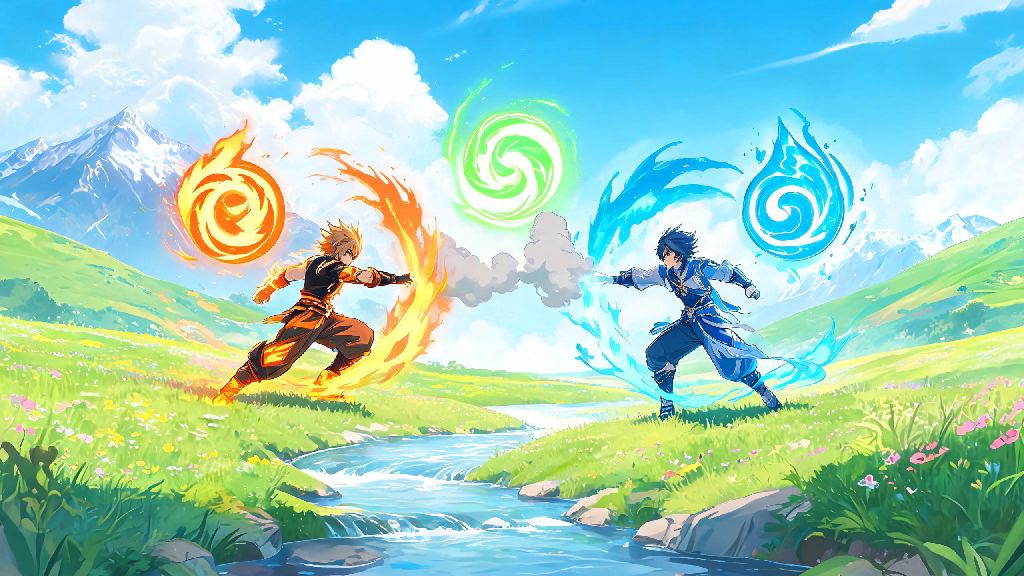
If you’ve played other open-world anime gacha games before, you’re probably used to elemental reactions being the core of every combat build and team composition. When I first downloaded Wuthering Waves last year, the first question I typed into the search bar was are there elemental reactions in Wuthering Waves, because I wanted to know if I’d have to memorize a whole new set of combo rules to play well. I’ve put over 120 hours into the game since then, cleared all endgame content, and tested every element combination you can think of, so I can break down exactly how the game’s element system works, no fluff included.
Are There Elemental Reactions in Wuthering Waves: The Short Answer
If you’re only here to confirm if there are elemental reactions in Wuthering Waves that work like the ones in Genshin Impact or Honkai: Star Rail, the answer is a clear no. There are no traditional cross-element combo reactions that give you bonus damage for hitting an enemy affected by one element with another. You won’t get extra damage for hitting a Glacio-coated enemy with Fusion, or trigger an AOE explosion by mixing Electro and Aero, like you might expect from other similar games. A lot of new players get frustrated when they first realize this, because they assume the element system is shallow or incomplete, but that’s not the case at all. The devs built Wuthering Waves’ combat to focus more on fast-paced action, parries, and character combo chains, so element interactions work a lot differently than you might be used to.
How Wuthering Waves’ Element System Works Instead
Even without combo reactions, elements still play a huge role in Wuthering Waves combat, especially as you get into harder endgame content. Elemental weakness breaking is the primary element-focused mechanic in the game, and ignoring it will make boss fights take 2-3 times longer than they need to. Every elite enemy and boss has an elemental shield bar that appears under their health bar, and hitting that shield with its opposite element will break it much faster than any other attack type. For example, a Glacio shield breaks 3x faster with Fusion attacks, while a Spectro shield crumbles fastest when hit with Havoc. Once you break an enemy’s shield, they lose all their damage resistance and get stunned for 3 to 5 seconds, which is the perfect window to land your heaviest damage combos. You also get team resonance buffs when you run multiple characters of the same element in your party. Two characters of the same element give a small passive buff, while three of the same element give a much bigger, game-changing buff. I used to run a fully mixed element team for my first 20 hours of play, and I couldn’t figure out why I was struggling to beat even the first world boss, until I swapped one character to match the boss’s weakness and added a second Glacio character for the resonance buff. I beat the boss on my first try after that swap, so it’s not a small difference.
Key Element-Related Mechanics You Should Master
You don’t have to spend hours studying spreadsheets to make the most of Wuthering Waves’ element system, but there are a few core mechanics that will make your playthrough a lot smoother. These are the three I always tell new players to prioritize first:
These mechanics are way more straightforward than memorizing 20+ elemental reaction combos, which makes the game a lot more accessible for casual players who don’t want to spend all their free time researching build guides. I’ve had friends who never play gacha games pick up Wuthering Waves and be able to clear most mid-game content within a week, just by following these three simple rules.
Common Misconceptions About Wuthering Waves Elements
Since Wuthering Waves’ element system works so differently from other popular gacha games, there are a lot of false claims floating around online about hidden mechanics or future updates. Let’s bust the most common ones I see every week in community forums. First, a lot of players claim that there are hidden elemental reactions that just haven’t been discovered yet, but that’s not true. Devs have explicitly stated in multiple official dev streams that they intentionally left traditional elemental reactions out of the game, and have no plans to add them in future updates. They wanted combat to focus on player skill with parries and combos, rather than optimal element rotation. Second, many new players assume that mono-element teams are the only viable option for endgame content, but that’s not the case either. You can run mixed teams very effectively, as long as you have at least one character to break the enemy’s shield. My main endgame team is a Glacio DPS, Electro support, and Fusion shield breaker, and I clear the highest difficulty Hollow Deep dives without any issues. Third, a lot of players claim that physical damage builds are stronger than elemental builds, but that’s not backed up by current game data. Elemental DPS builds outperform physical builds for around 70% of endgame bosses right now, because most endgame bosses have much lower elemental resistance than physical resistance. The only exception is a small handful of bosses that resist all elements, but those are very rare.
At the end of the day, if you were wondering are there elemental reactions in Wuthering Waves, the answer is no, not the kind you might be familiar with from other games, but that’s not a bad thing. The current element system is easy to learn, rewards quick decision making during fights, and doesn’t force you to play specific characters just to make a viable team. If you’re just starting out, don’t overcomplicate your team builds, focus on breaking enemy shields first, and you’ll be able to enjoy the game’s fast-paced combat without stress. I’ve played a lot of gacha games with overly complicated reaction systems, and I honestly prefer Wuthering Waves’ take, because it lets me play the characters I like instead of forcing me to follow a meta build that changes every patch.