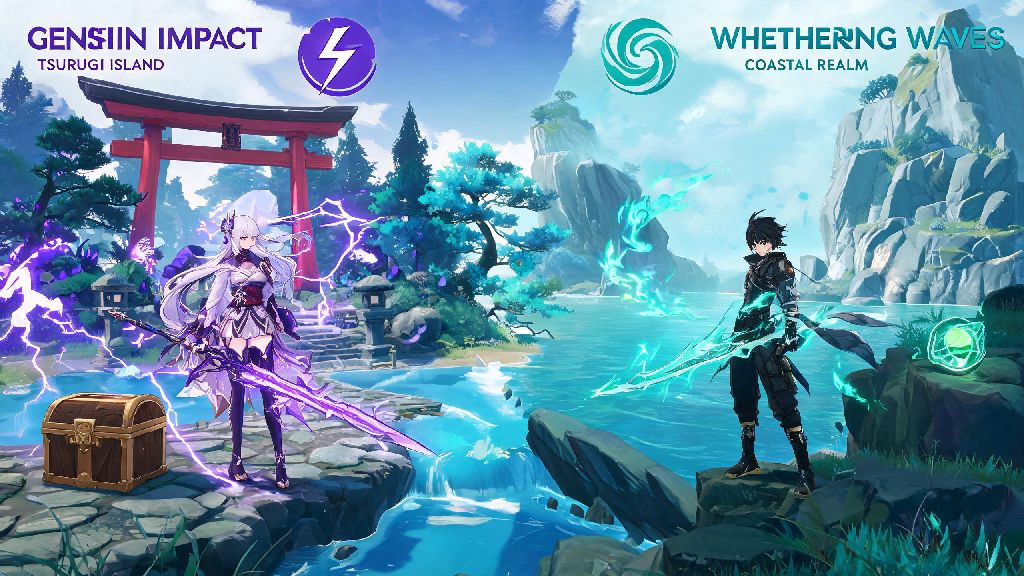
If you’ve spent any time in open world gacha game spaces over the past year, you’ve almost certainly seen the question did wuthering waves copy genshin pop up in comment sections, Reddit threads and social media debates. As someone who’s sunk 300+ hours into Genshin since launch and 120 hours into Wuthering Waves since its global release, I wanted to cut through the hot takes and biased fan arguments to give a real, fact-based look at the debate. It’s easy to see why people draw comparisons at first glance: both are anime-style open world gacha games with elemental combat systems, after all. But there’s a lot more nuance to this conversation than most surface-level takes give credit for.
Where the "did Wuthering Waves copy Genshin" claims come from in the first place
The first round of copy claims popped up when Wuthering Waves’ initial gameplay trailers dropped back in 2022. Viewers immediately pointed to the open world structure, elemental combat, party system and anime art style as clear copies of Genshin’s core design. A lot of people also noted that the game’s gacha pity system had nearly identical rates to Genshin’s, which added fuel to the fire. Shared genre conventions don’t equal copying, though, and it’s important to remember that Kuro Games, the studio behind Wuthering Waves, already had years of experience building action gacha games with their hit title Punishing: Gray Raven long before Wuthering Waves entered development.
It’s also worth acknowledging that Genshin itself drew heavy inspiration from The Legend of Zelda: Breath of the Wild, a connection that MiHoYo has openly talked about in past interviews. No game exists in a vacuum, and every new title in a genre borrows mechanics and design choices from the games that came before it. The line between inspiration and copying only gets crossed when a game lifts unique, signature elements without adding any original twists of its own.
Core mechanic differences that set the two games apart
A lot of people who only watch short clips of gameplay assume the systems are identical, but if you spend even 10 hours playing both, you’ll stop asking did wuthering waves copy genshin pretty quickly. The core gameplay loops are built for completely different types of players, and the differences only get more obvious as you reach endgame content. Some of the biggest gaps include:
I’ve played endgame content for both games, and the difference in skill required is night and day. I could clear Genshin’s hardest Spiral Abyss floors by following a meta team build and pressing buttons in the right order, but Wuthering Waves’ hardest boss fights require actual reaction speed and practice to beat even with a fully upgraded team. You can’t just copy a build from a guide and coast through Wuthering Waves’ endgame, which is a huge shift from Genshin’s current design philosophy.
Story, world design and artistic differences you might have missed
The surface level art style similarities are what drive a lot of the did wuthering waves copy genshin claims, but once you spend time exploring both worlds, the differences are impossible to miss. Wuthering Waves has a far darker, more grounded core premise than Genshin. Genshin is a light, whimsical adventure where you travel across Teyvat looking for your lost sibling, with bright, colorful regions and mostly hopeful story beats. Wuthering Waves is set in a post-apocalyptic world where a cataclysmic event called the Lament wiped out most of humanity, and you play as a Resonator who wakes up with no memory, fighting to survive against corrupted creatures and hostile factions.
The art style might look similar at first glance, but Wuthering Waves uses a more muted, desaturated color palette that fits its darker tone, while Genshin uses bright, saturated colors to match its whimsical vibe. Character writing is completely different between the two games too. Genshin’s characters are mostly designed to be likable, marketable figures with simple, easy to follow backstories that fit their regional theme. Wuthering Waves’ characters are far more morally gray, with many having tragic backstories tied directly to the game’s post-apocalyptic setting, and their motivations are often far more complex than what you see in Genshin. I was shocked by how many character side stories in Wuthering Waves had bittersweet or even sad endings, something Genshin almost never does outside of major archon quest moments.
Why the copy claims hurt both game communities in the long run
Treating every shared genre mechanic as copying stifles innovation in the open world gacha space. If every developer was scared to release a game with elemental combat or an open world because they’d be accused of copying Genshin, we’d never get new, unique takes on the genre. Wuthering Waves brings a lot of new ideas to the table, like its grapple traversal and parry-focused combat, that could inspire future Genshin updates too, which is a win for everyone. The constant comparison also leads to unnecessary fan fighting that makes both community spaces less welcoming for new players.
The constant arguments also take away from conversations about actual issues with both games. Instead of arguing about which game is a copy, we could be talking about Wuthering Waves’ messy early game progression issues, or Genshin’s ongoing problems with endgame content droughts. You don’t have to pick one game to enjoy either. I play both regularly, and they fill completely different niches for me: I play Genshin when I want a chill, low-stakes exploration experience with a fun story, and I play Wuthering Waves when I want fast, challenging combat that tests my skills. The only time this debate ever gets frustrating is when fans refuse to acknowledge that both games have their own strengths and weaknesses, and there’s room for both in the market.
At the end of the day, the question of did wuthering waves copy genshin has a pretty simple answer: no, it doesn’t. It borrows some core genre conventions that Genshin helped popularize for western audiences, but it has enough unique mechanics, story beats and design choices to stand entirely on its own as a separate game. If you’ve been avoiding Wuthering Waves because you thought it was just a Genshin clone, I’d recommend giving it a try for a few hours before making up your mind. You might be surprised by how different it feels once you get past the surface level similarities. If you’re a Genshin fan who hates seeing the comparison, you don’t have to play Wuthering Waves, but there’s no need to dismiss it entirely just because it exists in the same genre. More quality games in the open world gacha space is a good thing for everyone, no matter which one you prefer.