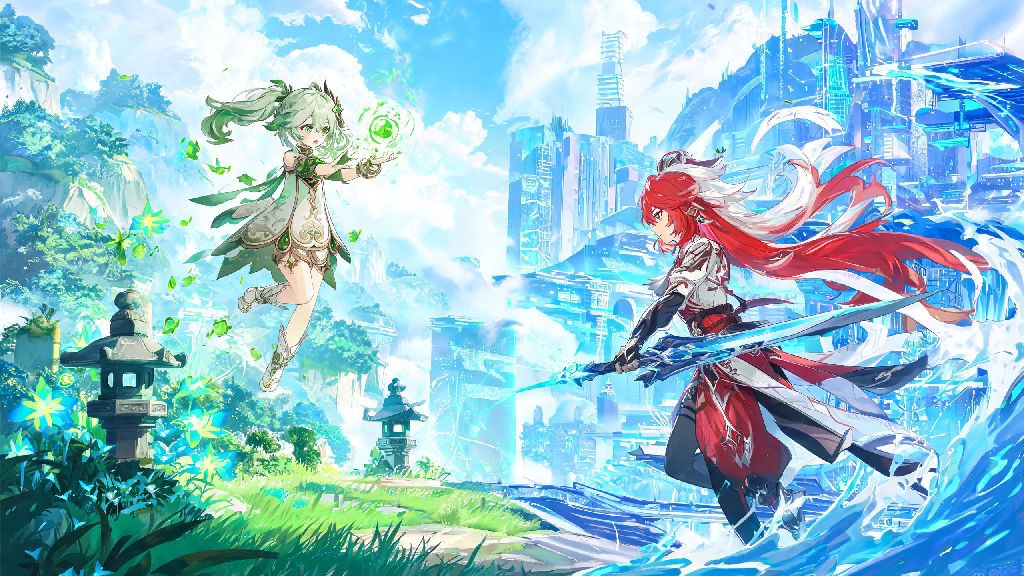
If you’ve scrolled TikTok or gaming forums in 2026, you’ve almost certainly seen clips of both Wuthering Waves and Genshin Impact popping up on your feed. A huge number of new players keep asking the same question: is Wuthering Waves like Genshin Impact? It’s a fair ask, since both are flashy, open-world gacha games with anime art styles and cross-platform support, but the two titles diverge far more than many casual onlookers realize. I’ve put 120+ hours into each game over the past year, so I’m breaking down exactly where they overlap, where they differ, and who each game is best suited for in 2026.
Core Similarities That Make People Ask If Wuthering Waves Is Like Genshin Impact
Before we dive into differences, it’s easy to see why so many players draw comparisons between the two games. Both launched with massive marketing budgets, target the same global audience, and share a handful of core design choices that feel familiar to gacha fans. The most obvious shared traits include:
You’ll also find anime-inspired open world design at the core of both titles, with distinct regions tied to different themes and character backstories. Both games receive regular free content updates every 6 weeks, adding new regions, characters, quests, and limited-time events for all players to enjoy. Party-based gameplay is another shared core, so you’ll need to build a balanced team of characters with different abilities to clear harder content in both games.
Combat Gameplay: Where the Two Games Diverge Most
If you’ve only seen 15-second clips online, you might still think the games are identical, but their combat loops are completely different. Genshin Impact’s combat is slow, strategy-focused, and built entirely around elemental reaction combos that deal massive damage when you pair the right elements together. You don’t need fast reflexes to do well, just a good team composition and knowledge of which reactions work best for different enemies.
Wuthering Waves combat is the exact opposite. It’s fast, fluid, and heavily rewards skillful play like perfect parries, dodge cancels, and aerial combos. Resonance effects (the equivalent of Genshin’s elemental reactions) mostly buff your party’s stats instead of dealing burst damage, so your personal skill matters far more than your team setup. If you’re a player who prefers fast, skill-based combat that rewards perfect timing over team composition planning, Wuthering Waves will feel far more satisfying than Genshin Impact. The 2026 Wuthering Waves summer update roadmap even adds new competitive combat leaderboards that cater specifically to players who want to test their skills against others, a feature Genshin Impact has never implemented for permanent content.
You’ll also find that cross-platform play support works far better for fast combat in Wuthering Waves, with controller support that’s far more responsive than Genshin’s 2026 controller layout options. Mobile players also get more customizable control settings in Wuthering Waves, so you can tweak buttons to fit your playstyle no matter what device you use.
Progression Systems and Gacha Pricing for 2026
Many players assume Wuthering Waves is like Genshin Impact when it comes to gacha systems, but the 2026 rate adjustments make it far more F2P friendly. Wuthering Waves has a base 5-star drop rate of 1.6%, compared to Genshin’s 0.6% base rate, so you’ll get 5-star characters almost 3 times as often on average. The hard pity for limited 5-stars is also 10 pulls lower, at 70 pulls instead of Genshin’s 80, and you get roughly double the free premium currency per patch from daily quests, events, and exploration.
Progression grind is also far less frustrating in Wuthering Waves. The game’s equivalent of Genshin’s artifact system is called the Outpost Mod system, and it has almost none of the random stat RNG that makes Genshin’s endgame grind feel endless. You can target specific stats you want for your characters, and you’ll never get a mod with completely useless rolls that you have to throw away. The lower gacha price point for paid bundles is another big plus for spenders, with monthly packs costing 30% less than Genshin’s equivalent offerings as of 2026.
That said, Genshin has a far larger roster of characters to collect, with over 75 playable characters available in 2026 compared to Wuthering Waves’ 32. If your main priority is collecting a wide range of different characters to play with, Genshin will be the better pick for you right now.
Story Tone and Endgame Content Offerings
The tone of each game’s story is another huge point of difference that many new players miss before they download. Genshin Impact’s story is bright, whimsical, and family-friendly, with a focus on the Traveler exploring the world of Teyvat to find their lost sibling. Side quests are often silly and lighthearted, and the game rarely touches on dark or mature themes, making it a great pick for players of all ages.
Wuthering Waves’ story is the complete opposite. It’s set in a post-apocalyptic world recovering from a global disaster called the Calamity, and the story deals with heavy themes like grief, survival, and moral ambiguity. There are no cartoonish silly side characters, and many quest lines have bittersweet or tragic endings that stick with you long after you finish them. If you prefer more mature, grounded stories in your games, Wuthering Waves will be a far better fit than Genshin’s more lighthearted narrative.
Endgame content is another big differentiator. Genshin’s only permanent endgame content is the Spiral Abyss, a 12-floor challenge that resets every two weeks, plus limited-time events that last 2-3 weeks each. Wuthering Waves has a far wider range of permanent endgame content, including a roguelike mode, daily rotating world bosses, adjustable difficulty combat challenges, and 8-player guild raids added in the 2026 spring update. If you want a game you can play for 2+ hours a day without running out of things to do, Wuthering Waves is the clear pick. But if you prefer a more casual game you can log into for 30 minutes a day to do your dailies and log off, Genshin works perfectly for that playstyle.
At the end of the day, the answer to is Wuthering Waves like Genshin Impact depends entirely on what aspects of the games you’re looking at. They share surface-level traits as open-world gacha games, but their combat, progression, story, and endgame are built for completely different player bases. If you like fast action, darker stories, and generous gacha rates, Wuthering Waves is the clear pick for you in 2026. If you prefer relaxed exploration, whimsical characters, and a more casual gameplay loop, Genshin Impact will probably be a better fit. No matter which you choose, both are high-quality games that offer dozens of hours of free content for new players.